

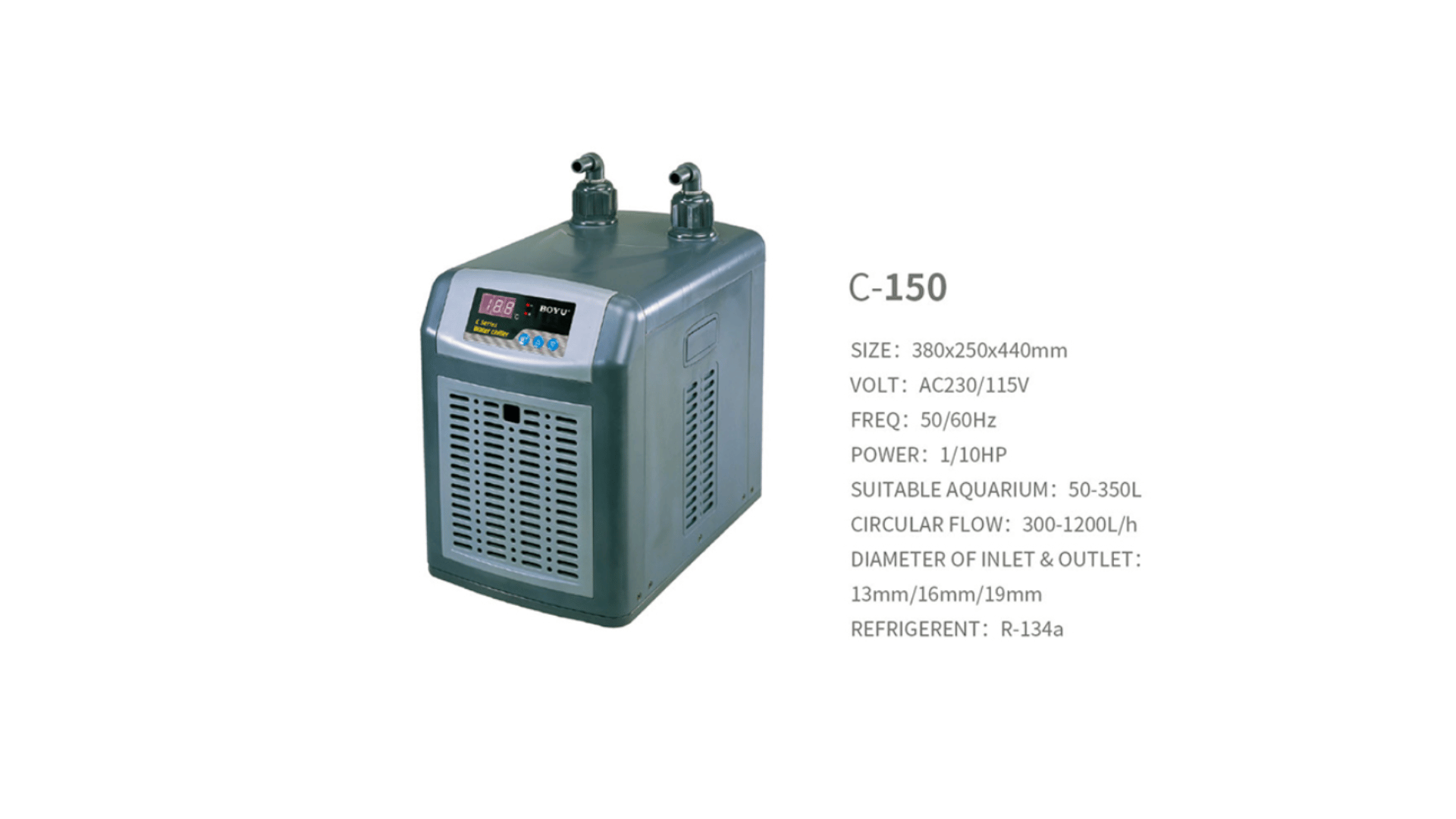


An aquarium chiller is a specialized device designed to regulate the temperature of water in aquariums by removing excess heat. It ensures a stable and cool environment, which is crucial for the health and well-being of aquatic life, especially for species that thrive in cooler temperatures or in environments prone to temperature fluctuations.
C Series Chillers
Models: C-150, C-160, C-250. Designed for super-refrigeration, capable of decreasing water temperature from 35°C to 18°C rapidly. Equipped with a micro-computerized control system for accurate temperature control and safety features for reliable operation.
How Does an Aquarium Chiller Work?
An aquarium chiller functions similarly to a refrigerator. It uses a refrigeration cycle to remove heat from the water:
- Water Flow: Water from the aquarium is pumped into the chiller using a water pump or an external filtration system.
- Heat Exchange: Inside the chiller, the water passes through a heat exchange coil, where the refrigerant absorbs heat from the water.
- Cooling: The refrigerant transfers the heat to the chiller’s condenser, where it is released into the surrounding air.
- Return Flow: The cooled water is returned to the aquarium, maintaining a stable temperature.
Why Use an Aquarium Chiller?
- Temperature Stability:
- Many aquatic species require specific temperature ranges for optimal health.
- Chillers prevent overheating, especially in warm climates or under intense aquarium lighting.
- Protecting Sensitive Species:
- Cold-water fish (e.g., goldfish, trout) and invertebrates often need cooler water.
- Corals in reef aquariums are sensitive to temperature fluctuations.
- Equipment Heat Compensation:
- High-powered equipment, such as lighting, pumps, and heaters, can raise water temperatures. Chillers counteract this heat.
- Preventing Algae Growth:
- Warm water promotes algae growth, which can harm the aquarium’s ecosystem.
Types of Aquarium Chillers
- Drop-In Chillers:
- Features a cooling coil that is placed directly into the sump or aquarium.
- Ideal for setups where space is limited or plumbing is challenging.
- In-Line Chillers:
- Installed externally and connected to the aquarium’s filtration system.
- Suitable for larger systems with higher cooling needs.
- Thermoelectric Chillers:
- Compact and energy-efficient, using the Peltier effect to cool.
- Best for smaller tanks with modest cooling requirements.Key Features to Consider
- Cooling Capacity:
- Measured in horsepower (HP), ranging from 1/10 HP for small tanks to 1 HP for large systems.
- Choose a chiller that matches your tank size and cooling requirements.
- Flow Rate:
- Ensure compatibility with your pump’s flow rate to maintain efficiency.
- Noise Level:
- Look for models with quieter operation, especially for indoor setups.
- Energy Efficiency:
- Modern chillers are designed to consume less energy while delivering effective cooling.
- Digital Controls:
- Most chillers come with a digital temperature controller for precise adjustments.
Maintenance Tips
- Regular Cleaning: Keep the chiller’s intake and heat exchange components clean to ensure efficient operation.
- Proper Ventilation: Place the chiller in a well-ventilated area to prevent overheating.
- Monitor Performance: Check for leaks, unusual noises, or decreased cooling efficiency periodically.
- Most chillers come with a digital temperature controller for precise adjustments.
- Cooling Capacity:


Reviews
There are no reviews yet.